
ESSIEN

Available soon on vinyl
Lou Bold
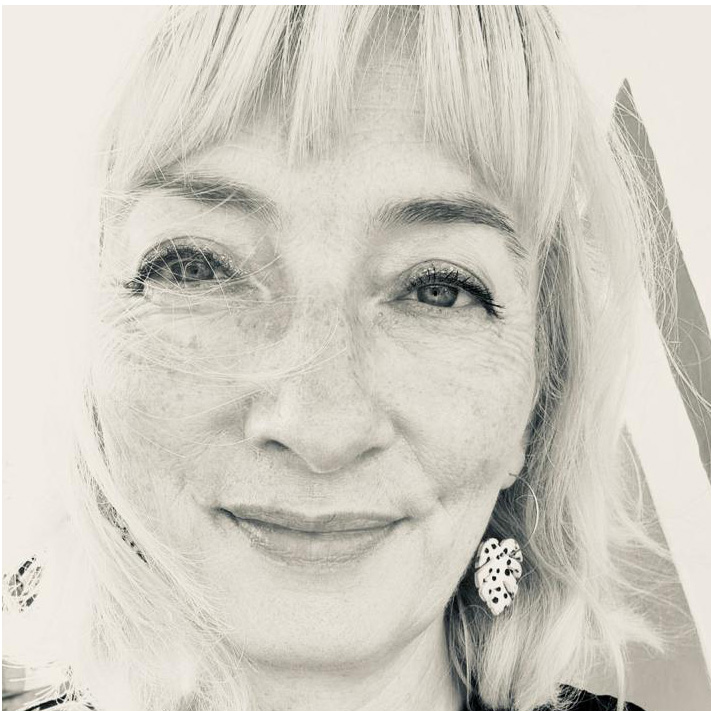
Lou is interested in emotional, lyrical encounters with edge. Her background in dance music combined with a love of pop and folk gives her a unique sound.
She writes and sings for DJs, composers and herself, and has appeared as one half of Stroop. Her next incarnation, Civil Beasts, in collaboration with Derek Kirkup, is due for release in 2025. And dance floors are already abuzz with her experimental house project in conjunction with London legendaries Jeremy Newall and Frankie Valentine.
ESSIEN

A musical nomad, Essien (aka musician and producer, James Fellows) came of age in the early days of London’s rare groove renaissance and the city’s growing IDM scene.
Inspired by a producer friend recently returned from Nigeria, Essien’s pursuit of a truly expansive musical education took him to French-speaking West Africa, where he spent a year steeped in Malian blues and Congolese Rumba.
From West Africa, Essien moved to Paris, dividing his time between classical concert halls and intimate basement jazz clubs, and DJing at some of the city’s most eclectic house parties. A chance, last-night encounter with legendary jazz poet, Gil Scott-Heron, turned him back to his rare groove beginnings and, back to London.
Returning just as the nu-jazz, downtempo scene was gaining traction, Essien began composing instrumental pieces on acoustic instruments, weaving them between layers of electronic sounds. His vision was to capture the soul-expanding moments, those tides of orchestration where jazz and classical meet, foregrounded with rich layers of electronica and the organic hum of live instrumentation.
It finally came together in Bristol – the city’s joyful, genre-blending, D.I.Y. soul connecting him with like-minded singers and artists to conjure something truly unique.
The resulting debut album, “Your Best Thinking Got Me Here,” pulls his musical loves, past and present, into an emotionally rich, yet irresistibly danceable tour-de-force.
Seki Lynch
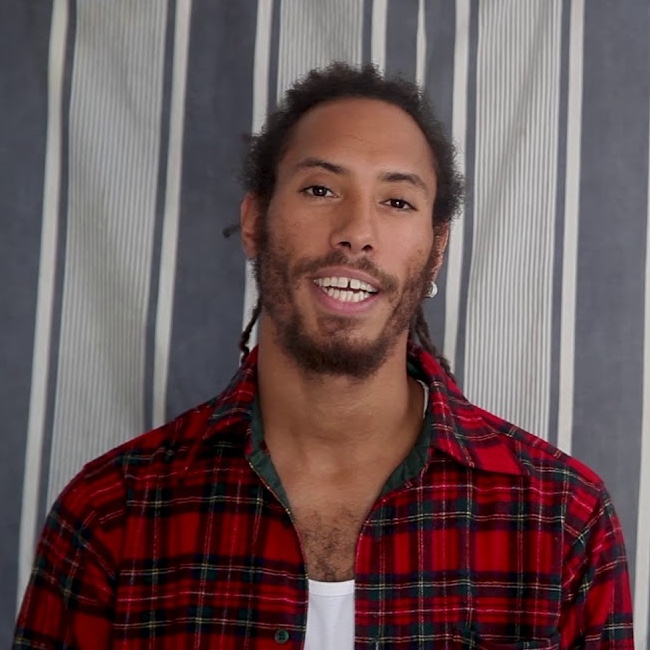
Seki Lynch is an author, poet, lyricist and playwright whose work explores love, connection and consciousness.
His show, ‘Under the Sun Our Heart Are Beating’ pairs poetry from his debut collection of the same name, blending poetry with jazz accompaniment from three members of the Ancient Infinity Orchestra.
His most recent stage production, ‘Barber B: Each One, Teach One’, wove storytelling, music, dance and multi-media archives to tell stories from the life of barber and Leeds legend Brian Swarray.
Kamau Daáood
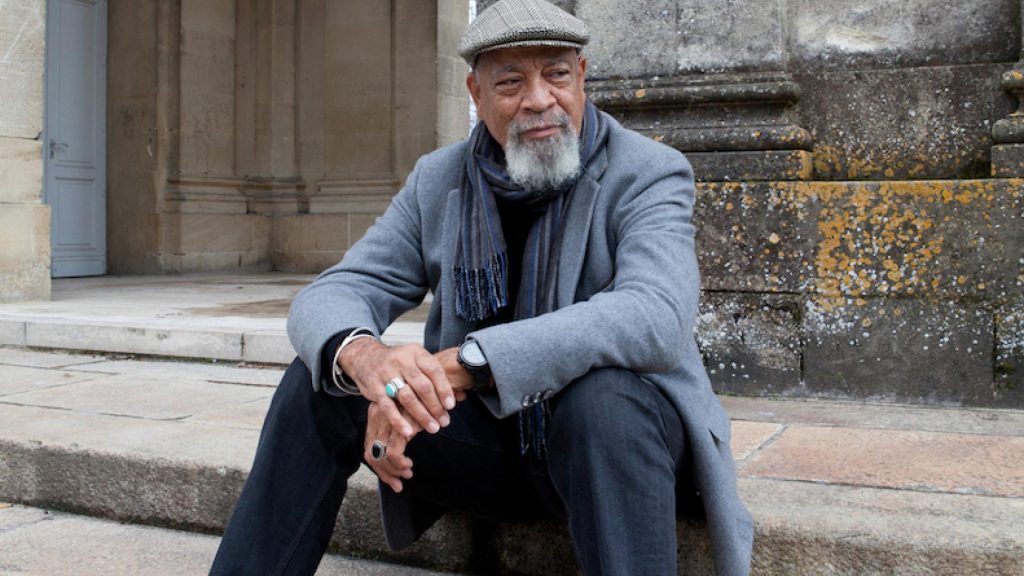
A native of Los Angeles, poet Kamau Daáood’s career began in the late 1960s as a member of the Watts Writers Workshop and the Pan Afrikan People’s Arkestra under the direction of pianist Horace Tapscott.
Daáood has spent over 40 years performing, recording, curating, teaching and producing, organizing and creating art in schools, churches, prisons, storefronts, libraries, festivals, conferences, museums, and galleries locally, nationally, and internationally.
He has worked as an instructor and curator for the city of Los Angeles Cultural Affairs Department at the Watts Towers Arts Center, taught African American music at Cal State Northridge and Otis College, and co-founded the World Stage Performance Gallery with drummer Billy Higgins.
“I am a devout poet. I believe that the right words offered in the right way can be music holding us together.
When we can speak the language of essence, we will be able to commune in a space miles above dogma and the confines of individual traditions. And we can develop into evolved human beings capable of radiating profound love, light, and service to others.
I believe wholeheartedly that art in community is noble work that fosters beauty and meaning into our lives.
That art is vital and necessary.”
Carmen Ross

A graduate of the South African College of Music, Carmen Ross is a musician (piano, bass, drums), vocalist, producer and song-writer.
She has performed under the baton of the English composer and conductor, Sir John Rutter as well as in a host of jazz collectives and orchestras.
Now firmly rooted in London, Carmen has composed and produced music for musicals, adverts and cross-genre commercial tracks.
Her voice is rich in character but shot through with a disarming tenderness that lends her performances a powerful emotional heft.
The Western Ways Are Dying
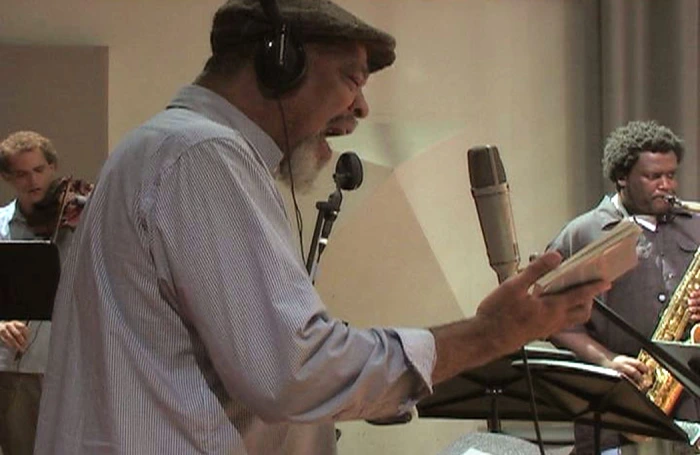
Last night I got an email from Los Angeles that made me whoop. Turns out I was right to trust my gut. To reach out to him.
It all goes back to last summer when I was stopped in my tracks by a song I heard on Gilles Peterson’s Radio 6 show.
‘McKowsky’s First Fifth’ was a sprawling, 15-minute jazz odyssey recorded in a church on 85th and Holmes in L.A. in 1979 by Horace Tapscott and the Pan-Afrikan People’s Arkestra.
As well as a pretty weird name, the track had piano runs, flights of flutes and soprano sax. It had stabs of tuba and trombone slides and cascades of clarinet. But that wasn’t what grabbed me.
Rising above all of this curated wonder and chaos was a voice that carried itself like a staff into battle. His words landing like seeds falling, bedding into the earth, bursting into flowers. Into flame.
It was a voice so matured through time that it had become timeless. Rooted in communion with things unseen.
For the first time since I was a kid, I wrote all the words out, listening again and again to catch the cadences. Writing and crossing out and rewriting. Arranging it in verses and stanzas until it hung just right on the page. The page, a leaf dripping honeydew.
“The world is a whole note, sustained, augmented and diminished by divinity.”
Kamau Daáood
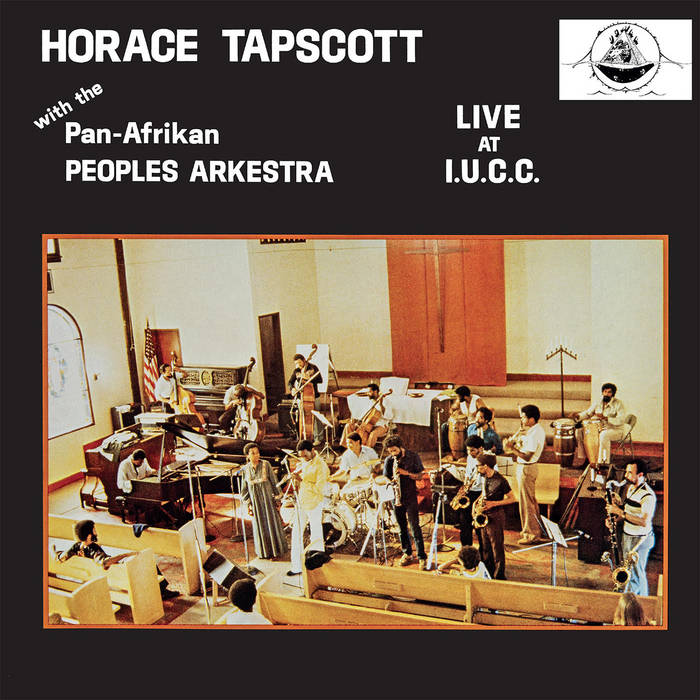
I bought Horace Tapscott with the Pan-Afrikan People’s Arkestra live at IUCC to discover the name of the poet whose words had seized me. I wanted to reach out to him, to ask if I could plant his spoken word into a track I was working on; harness his power and bring it to an audience who might have forgotten what passion sounds like and how devotion can soar.
But the track didn’t appear on this album.
I was crushed. I did some more digging, ordered a few more LPs. Hell, I even got the cell number of Jesse Sharps, the man credited with writing the song, but couldn’t get through to him. It’s fair to say that at this point that I was on a mission. I’d become obsessed.
But shortly after that I gave up. Maybe the name of the spoken word artist was never recorded, lost in the annals of time. Maybe I would never find him. Maybe he had passed on to the next world, was ‘standing on the cosmic stage now.’
By night then, I gently lifted his voice from the track and arranged my music around it, like ivy curling around anthracite. It was released on September 6th as track 7 on my debut. The track is called ‘The Western Ways are Dying’; a line taken from ‘McKowsky’s First Fifth’
And then, and I can’t remember how, a few weeks ago, I came across an album called ‘Healing Suite’ by LA-based collective, The Gathering, released in 2022.
‘Healer from the depth of us come
Healer from the depth of us come
Mender of minds
Soother of souls’
These words ascribed to the performance poet and mythic figure in the Southern California arts scene, Kamau Daáood. Was it the same voice, the power, performance and lyricism of the voice that shook the air (and me) in that recording over 40yrs ago?
Back to the digging and googling and chatgpt-ing. A few prospective emails turned up nothing, some bounced back, other mailboxes were full.
And then last night this came and in and I dissolved into a fanboy swoon.
“Eden. I understand you been trying to reach me. Let me know what’s on your mind. Hope all is well.
Brightness
Kamau”
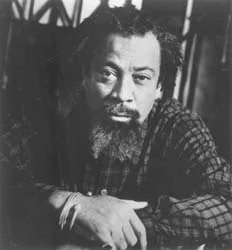
Kamau Daáood was raised in Watts, an LA neighbourhood pivotal to the civil rights movement. James Brown name checked Watts in his music, as did NWA and Kendrick Lamar. The place is a symbol of resilience, resistance, and the complex interplay between oppression and hope. And to me, Kamau and his words represented all of this. He was the source. Not to mention the fact that his poetry readings have brought him to podiums with the likes of Gil Scott Heron and The Last Poets.
And here he was. In my inbox.
Holy fuck.
I messaged back. Was it him reciting his poetry in that 1979 recording? (Yes) Did I have his blessing to use and credit his voice on the my track ‘The Western Ways are Dying’? He replied…
“I like what you’ve done with the track. Recorded over 40yrs ago. You have my blessing to use it, giving it new life…I realize that these projects are a labour of love first and foremost.”
It was this last line that got me.
“These projects are a labour of love first and foremost.”
It meant he’d got me.
And I’d been right about him too.
That a man, now in his seventies, who’d devoted his life to raising up his community and giving a voice to the viciously disenfranchised, would not be primarily concerned with copyright and royalties. Not, at least, if he sensed that behind the request was a man toiling in love’s name. Whose songs were, first and foremost, a labour of love.
I’ve made some poor choices in my life.
Reaching out to Kamau was not one of them.
Bass is the Place
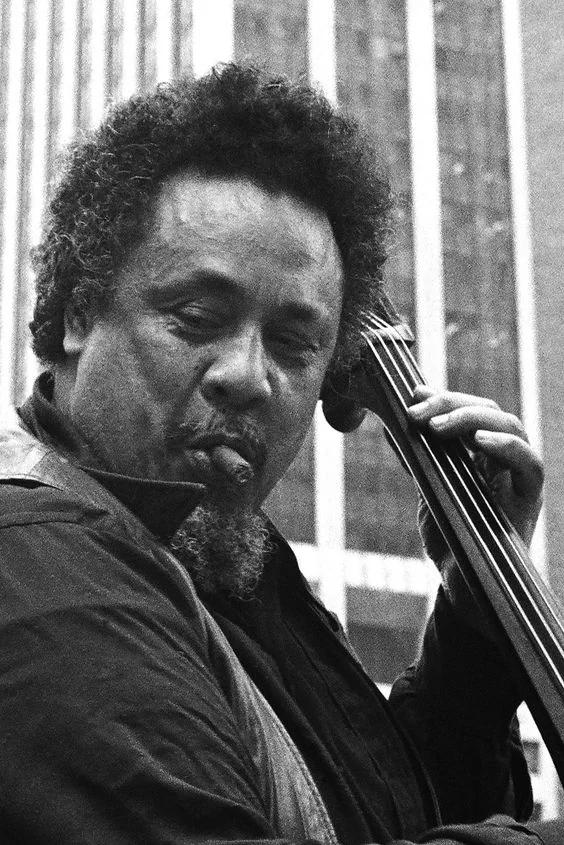
The first time I really heard the loaded, full-bore rumble of the double bass, I was stopped dead in my tracks.
It was the swinging 90s, and I was in a basement in Paris’ 10th, all dark drapes, candlelight and rickety bar stools.
The bass itself, slouching beside the bar with a kind of raffish, fat-bellied idleness, looked classy, all dressed up in its sheen of spruce and maple. But the sound…my God. It was a sort of primal hum, a broadcast dispatched from the cosmic void.
I was smitten.
Like a courtly lover, for decades I admired the double bass from afar; in music shops, at gigs, in LP liner notes and in photos of Charles Mingus wrangling his bass whilst chuffing on a fat cigar.
In the end though, I gave in. First renting a double bass and then, inevitably, buying my own big, earthbound, sonic butterfly. I had to feel into its origins, where its sound began, how it felt to the touch.
It started badly. I kept bashing my head into the tuning pegs and cutting my brow. It took me half an hour to get it into, and then out of, its ridiculously large body bag.
It humiliated me. But I tamed it.
“Don’t Trouble The Moon” is track 5 of my debut album “Your Best Thinking Got Me Here”
It’s built around a simple, repeating double bass motif and features a sample of Randy Crawford singing J.J. Cale’s haunting classic, “Cajun Moon.”